 Skip to content

This article has been updated in 2026 with the latest information.
Are you thinking of studying Italian in Italy but don’t know where to start? We got you covered with this guide about Italian language courses structure and possibilities.
Applications are generally divided into two categories: short-term courses (up to 90 days) and long-term courses (over 90 days and up to one year), which require a student visa.
Short-term Italian language courses (up to 90 days)
Short-term programs are ideal for beginners, those who have never been to Italy, or anyone who doesn’t have the time to commit long term, while still offering the chance to enjoy the country and gain basic language skills and cultural insights.
The process is simple, especially for passport holders from countries that don’t require a tourist visa to enter Italy. In most cases, you can stay and study for up to 90 consecutive days without needing additional paperwork. Check our visa calculator to find out if you need to a apply for a tourist visa.
If you don’t need a tourist visa to enter Italy, applying for an Italian language course is simple: just complete a short online form and ensure your passport is valid for at least three months beyond your intended departure date.
Application deadlines for short-term Italian language courses without a visa are typically a few weeks before the start date. However, due to schools limited availability, it’s smart to secure your spot early by paying a deposit, usually deducted from your total tuition, at least a couple of months in advance. The remaining tuition is typically paid a few weeks before your arrival in Italy. We will guide you step by step through everything you need to do, so you don’t have to worry about the process. Just send us an email.
If you need to apply for a tourist visa, you can generally follow the same procedures outlined below for long-term courses. However, requirements may vary depending on your passport nationality, so we recommend contacting us directly so we can guide you through the process.
Long-term Italian language courses (over 90 Days)
For programs that extend beyond 90 days, a student visa is required. The process is more detailed and involves several steps. According to Italian law, student visa applicants must enroll in a course that includes at least 20 hours of classes per week.
To begin, you’ll need to pay a deposit of the total tuition to reserve your place. This varies depending on the school, in some cases, the deposit may be around €200, while in others it could be approximately 20–25% of the total tuition fee.
The remaining balance is typically due before your visa appointment at the embassy, as full tuition payment is required for the school to issue your official documents, such as the Enrollment Certificate, which are necessary for your visa application.
You’ll also need to demonstrate financial stability. This means showing that you can support yourself during your stay, usually about €900- €1,000 for each month of studies in Italy. If you don’t have sufficient funds, you can list your parents or another relative as financial sponsors and provide documentation of their income and savings.
Student visa application deadlines are generally a couple of months before your course begins. However, we strongly encourage applying as early as possible, as spots are limited and visa processing times can vary.
Language requirements for Italian language schools
Recently, you may have come across Italian language requirements for enrolling in a course in Italy, which can seem a bit counterintuitive. After all, you’re applying to a language school to learn Italian, right? The reason behind this comes down to a few important factors.
First, language requirements are often linked to student visa regulations for both Italian language schools and universities. For university programs taught in Italian, this is straightforward: you need to follow lectures, participate in discussions, and complete exams in Italian, so a minimum level, typically around B1, is necessary.
For Italian language courses that require a student visa, the reasoning is slightly different. Immigration authorities generally expect that you have already started learning Italian in your home country and are coming to Italy to further develop your skills. This helps demonstrate genuine commitment to your studies and ensures that the visa is being used for its intended purpose. The exact Italian level required can vary depending on the local Italian embassy, so it’s important to confirm the specific requirements for your case. Contact us, and we can help by looking into this for you.
Regardless of the visa type or formal requirements, we always recommend starting to learn some Italian before arriving to Italy. All courses, including beginner courses in Italy are taught entirely in Italian, as this immersive approach is widely considered the most effective way to learn. Having a basic foundation will help you settle in more easily and make the most of your first days.
If you don’t know where to start from, join the A1 online course we offer in partnership with Linguaviva, one of the best Italian language schools with over 50 years of experience teaching Italian.
Type of Italian language courses
Language schools in Italy offer a wide range of course options to suit different learning styles and schedules. You can choose from private lessons, standard group classes (typically with 10–12 students), or very small group sessions (2–3 students). Course intensity can also vary, starting from 15 hours per week up to 20, 30, or more.
Italian classes are typically held in the mornings, with activities scheduled in the afternoons. However, this may vary depending on the school and the number of enrolled students.
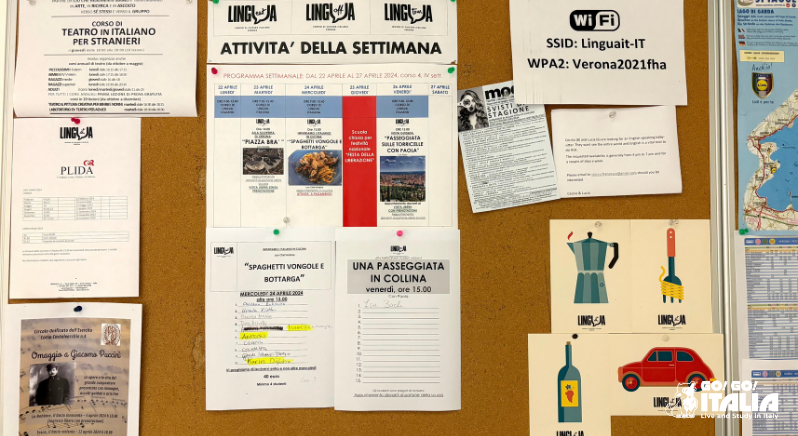
In addition to language instruction, many schools offer a variety of engaging extracurricular activities to enrich your experience. These can include city tours, film screenings, cooking classes, and themed workshops on topics such as business Italian, fine arts, or opera appreciation. Some schools also offer more specialized programs, like Italian language learning combined with university preparation.
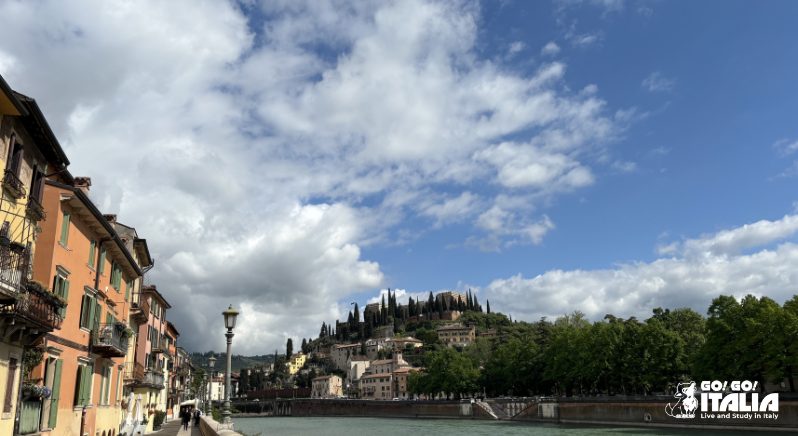
The type of activities available often depends on the school’s location. For instance, a school in Taormina might include beach outings or scuba diving, while one in Verona may feature courses on opera history.
Ready to start planning your Italian course, or just have a few questions? Contact us!